
THC and CBD: What They Actually Do to Your Immune System
THC and CBD: What They Actually Do to Your Immune System
These two compounds don't work the same way - and for patients with autoimmune conditions or immune deficiencies, the distinction is worth understanding.
In a previous article, we covered how marijuana affects healthy versus compromised immune systems differently. The short version: healthy users tend to experience immune suppression, while people with autoimmune diseases may actually benefit. Now let's go a level deeper - looking at how THC and CBD each interact with the immune system on their own terms.
How the Endocannabinoid System Fits In
Your body has a built-in regulatory network called the endocannabinoid system. It's part of the central nervous system and its job is maintaining homeostasis - keeping your body's functions balanced and stable. It does this through two main tools: endocannabinoids (chemical signals your body produces naturally) and receptors called CB1 and CB2.
These receptors and endocannabinoids communicate by binding together, and that binding process plays a direct role in regulating immune function. In people with autoimmune disorders, the body's own endocannabinoids sometimes fail to do their job properly. When that happens, the body can accept cannabinoids from cannabis as a substitute.
CB1 and CB2 receptors serve different purposes. CB1 receptors are primarily involved in pain perception, coordination, mood, appetite, and brain function. CB2 receptors are more directly tied to immune response - particularly inflammation.
Both THC and CBD interact with these two receptor types, but in very different ways.
CBD: The Modulator
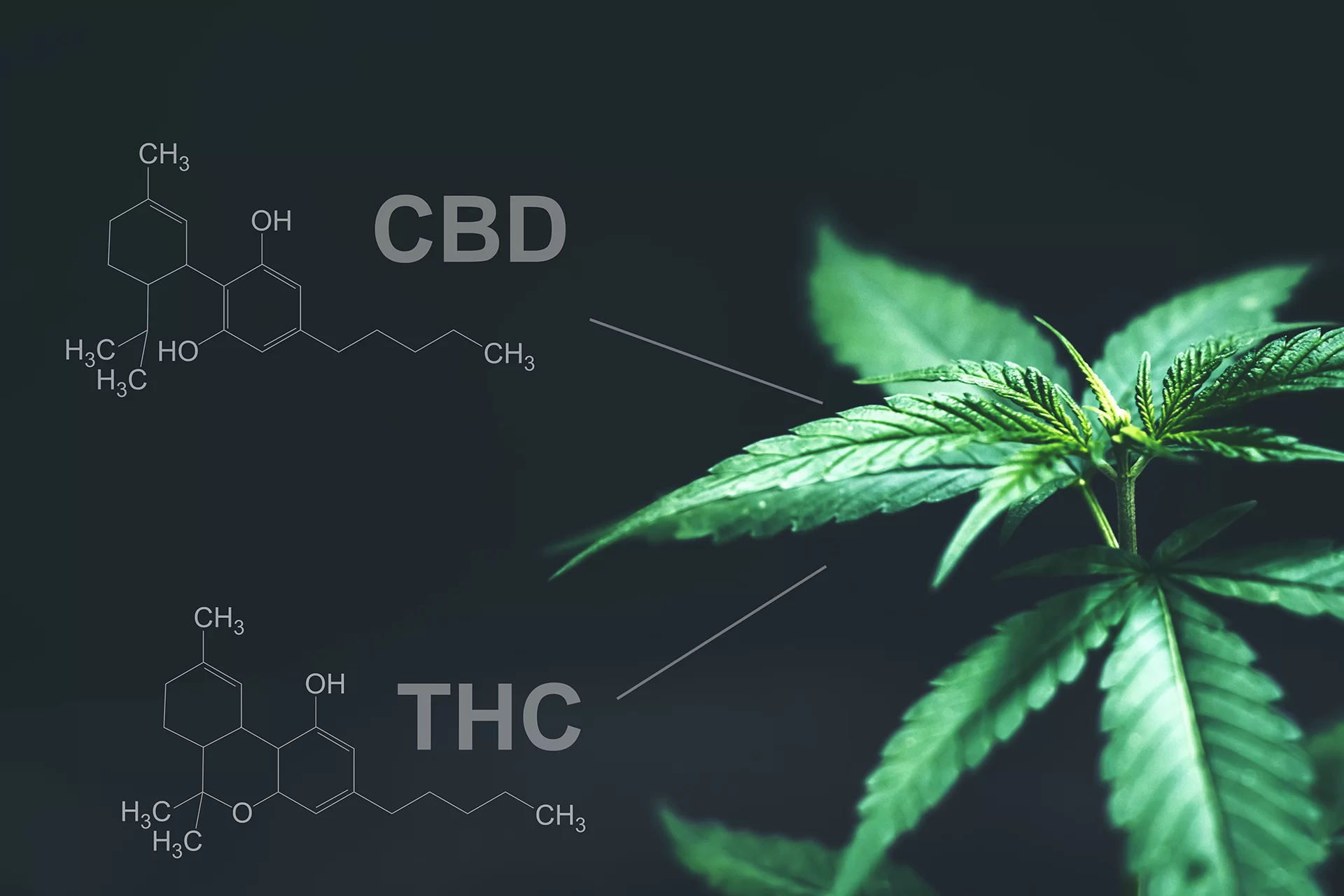
CBD (cannabidiol) doesn't bind directly to CB1 or CB2 receptors. Instead, it works indirectly - essentially encouraging your body to produce more of its own endocannabinoids rather than replacing them outright.
What makes CBD unusual is that its effect on immunity goes in both directions. In immunodeficient patients - people with HIV, for example - research has shown CBD can encourage white blood cell production and help boost immune response. In patients with autoimmune disorders like rheumatoid arthritis, studies have shown the opposite: CBD helps suppress overactive immune responses, including inflammation.
This isn't a contradiction. It reflects the fact that CBD functions more like a regulator than a simple on/off switch. It responds to what the body needs. Think of it less as an immune booster or suppressant and more as a modulator that nudges the system toward balance.
THC: The More Direct Player
THC takes a more hands-on approach. Unlike CBD, THC actively binds to both CB1 and CB2 receptors directly.
Its well-known psychoactive effects come from binding at CB1 receptors, which govern brain function and pain signaling. When THC binds there, it can blunt the perception of pain - something CB1 receptors are specifically wired to regulate.
The more significant immune-related activity happens at CB2 receptors. A 1994 patient study confirmed that when THC binds to CB2 receptors, it activates proteins that suppress the immune response and influence T-cells. For people with autoimmune diseases like rheumatoid arthritis or Crohn's disease, this suppression of inflammation is the therapeutic goal.
The research gets more compelling from there. In 2011, the University of Louisiana studied THC's effects on monkeys infected with simian immunodeficiency virus (SIV) - the primate analog to HIV. Monkeys given THC doses starting 28 days before infection showed reduced viral load and lived longer than the control group. A follow-up study in 2014 by the same team administered THC 17 months before infection. The results included increased T-cell counts, further reduced viral load, and protection against the intestinal damage that SIV typically causes.
These findings have led researchers to consider THC's potential not just as an immunosuppressant, but as an immunostimulant - depending on context and timing. It's worth noting these were animal studies, and direct application to human treatment requires more research.
What We Know - and What We Don't
There's still a lot of work left to do in understanding exactly how to balance THC and CBD for specific immunotherapy applications. Dosing, timing, strain selection, and individual biology all factor in.
What is reasonably well-supported: cannabis can address many of the secondary symptoms that autoimmune and immunodeficient patients deal with - pain, inflammation, nausea, appetite loss. What it hasn't demonstrated is usefulness during acute viral illnesses like the flu. That's an important distinction to hold onto.
The Simple Version
CBD doesn't bind directly to your immune receptors - it prompts your body to self-regulate. The result can be either immune boosting or suppression depending on what your system needs. THC binds directly, tends to suppress overactive immune responses, and has shown some promising immunostimulant effects in early research. For people with autoimmune conditions, both compounds offer potential - but in different ways, through different mechanisms. Neither is a cure-all, and neither should be treated as one.
Sources:
Need Urgent Care today?
We’re here to help — fast, affordable, and straightforward.