
Starting Over
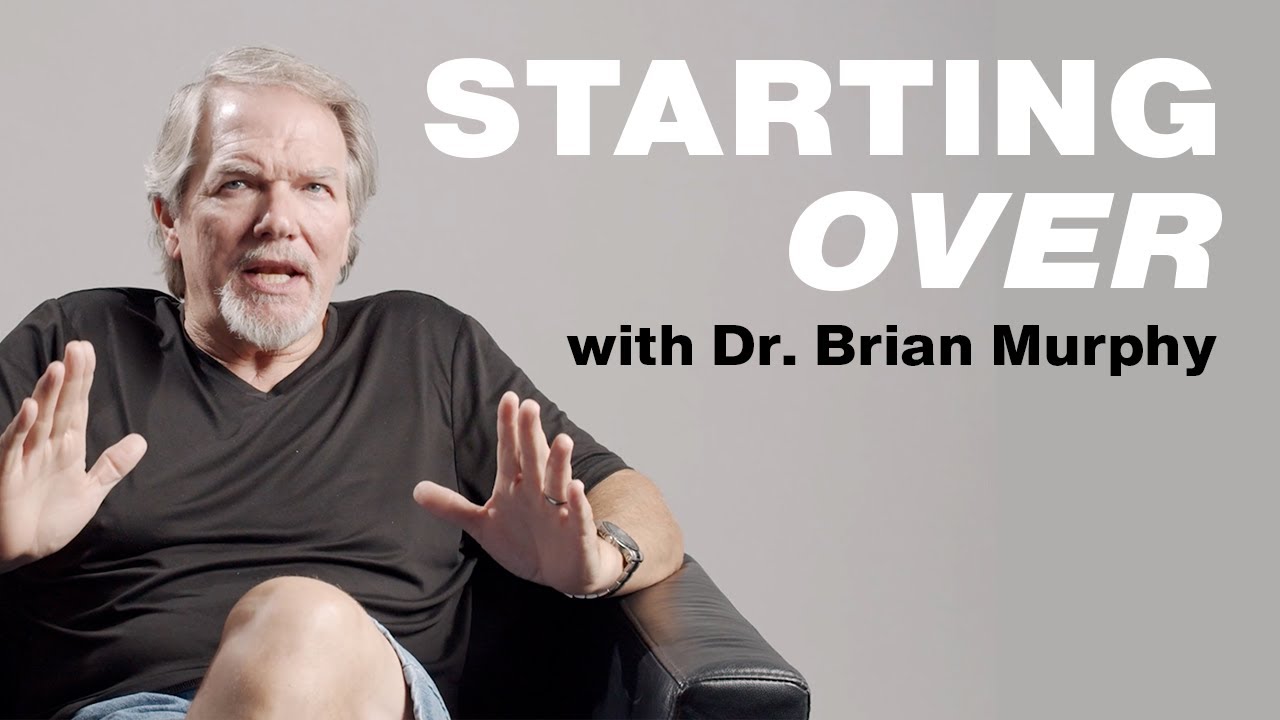
Even I Had to Start Over
Admitting you don't know everything about weight isn't a setback. It's the only way forward — and I know because I had to do it myself.
Medical school teaches you a version of nutrition. Generalities, principles, frameworks. It's not useless — but it's incomplete in specific ways that matter, and some of it is just wrong.
I had to figure that out the hard way, about 40 years ago, and unlearn what I'd been taught before I could actually help people. That process was uncomfortable. It also made everything that came after it possible.
The Problem With "Close Enough"
The principles taught in most nutrition education are broadly true. Eat less, move more. Reduce calories. Avoid excess fat. These aren't lies. They're approximations — and approximations work until they don't.
What breaks down is the math. When you apply general principles to a specific person with a specific metabolism, specific habits, and a specific history of what they've already tried, the fuzzy version stops fitting. You need something more precise.
That's when the generalities run out, and you have to actually understand what's happening — not just follow a framework and hope it holds.
What Starting Over Actually Looks Like
I'm not asking patients to forget everything and begin from nothing. I'm asking them to hold what they've been told loosely — to treat it as a hypothesis rather than a fact until it's been tested against reality.
Some of what you believe about weight loss will turn out to be right. Some will turn out to be working against you. The willingness to find out which is which is the only thing that separates people who eventually figure this out from people who keep cycling through the same approaches.
The patients who make the most progress are almost never the ones who arrive with the most knowledge. They're the ones who are most willing to question what they already know.
Why I'm Still Learning
Here's something I find genuinely interesting about this work: there is still more to learn. The science of how the body handles food, manages weight, and responds to different inputs is not a closed question. New research changes the picture. Things I believed confidently 20 years ago I've had to revise.
I don't say that to undermine your confidence in what I'm telling you. I say it because the willingness to update — to stay curious about whether what you're doing is actually working, and to change course when it isn't — is the right posture for this problem. It's the posture I try to maintain, and it's the one that produces results.
Weight loss is not a puzzle with a single correct answer that someone finally hands you. It's a process of progressively better understanding. And that process is, genuinely, one of the more interesting ones I've encountered in 40 years of medicine.
The First Step
If you've been carrying the weight long enough that the standard advice has stopped feeling useful — that's not a failure of effort. It may just be a sign that the framework needs to change.
Come in with an open mind. That's the whole requirement.
Need Urgent Care today?
We’re here to help — fast, affordable, and straightforward.