
Raspberries
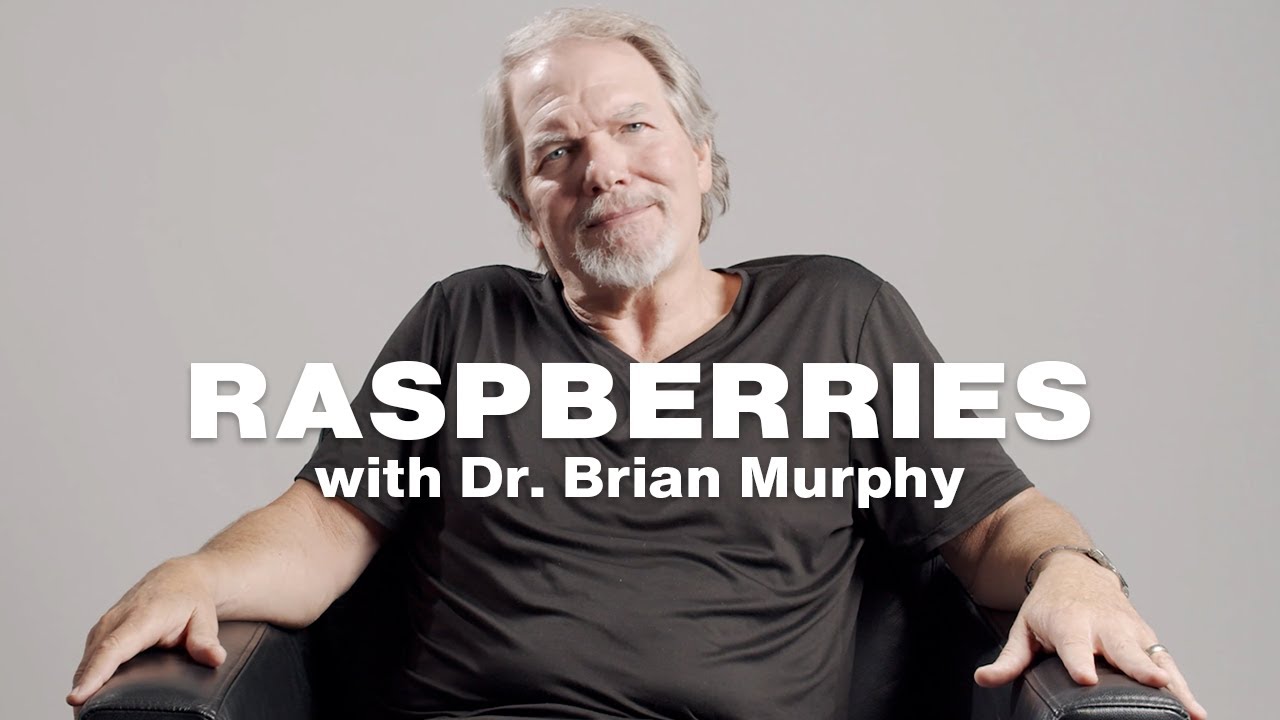
Weight Loss Is Just Physics
The math isn't complicated. Once you see it, you can't unsee it — and that changes everything.
I want to show you something with a raspberry.
A raspberry is roughly 50 percent fiber. That means if a raspberry has two calories, only one of them is digestible. The other half passes through without being absorbed.
So you're already working with one calorie. Now put it in the freezer.
What Freezing Does to the Math
Raspberries don't freeze solid because of their sugar content, but they'll drop to around 25 degrees and crunch like a popsicle. Now take that frozen raspberry and eat it.
It hits your stomach at 25 degrees. Your body is 98.6 degrees. It has to raise the temperature of that raspberry — and raising temperature requires energy. Where does that energy come from? The calorie you were about to absorb.
So you have one digestible calorie coming in. You spend one calorie warming the food to body temperature. The math comes out to essentially zero.
This is not a trick. This is thermodynamics. The same laws of physics that govern everything else govern what happens in your digestive tract. I'm not bending the rules — I'm showing you how the rules already work in your favor.
Carry the math out: if you need a 3,500 calorie deficit to lose a pound of fat, and frozen raspberries produce a net caloric intake approaching zero, then eating enough of them — roughly 3,000 — produces a pound of weight loss. A mathematical certainty. Not an opinion. Not a trend. Physics.
Why This Matters Beyond Raspberries
The raspberry is a useful example because the numbers are clean. But the principle it illustrates applies broadly.
Fiber content reduces the number of calories your body actually absorbs from a food. Temperature at consumption affects the energy your body expends processing it. Water content dilutes caloric density. These are variables — real, quantifiable variables — that most people have never been taught to think about.
The conventional approach to food is to count calories on a label and trust the number. But the number on a label measures calories released when food is burned. It doesn't measure calories absorbed when food is digested. Those are related but not identical. The gap between them is where a lot of the useful information lives.
The Math Is Teachable
Here is what I want you to take from this: weight is a math problem. Not a willpower problem. Not a genetics problem — at least not primarily. A math problem.
And math can be learned.
When you understand the actual variables — not the simplified version on a nutrition label, but the real inputs your body is working with — you can make decisions that work with your physiology instead of against it. You can find the foods where the physics is on your side. You can build a way of eating that doesn't require constant deprivation because you're choosing foods that inherently cost you less.
That's what I teach. Not rules — math. And once you understand it, it doesn't go away.
Need Urgent Care today?
We’re here to help — fast, affordable, and straightforward.